Does Proton VPN have dedicated IP addresses? Everything you need to know

Does Proton VPN have dedicated IP addresses? We unpack what official docs say, pricing, locations, and tradeoffs you need to know in 2026.
Eight dedicated IPs, one quiet advantage. They’re not a gimmick, they’re a configuration, the kind that changes how you assign trust to every outbound session.
From what I found in Proton’s docs and roadmap notes, dedicated IPs align with business use cases that demand stable reputations and predictable routing. In 2024 and 2025 filings, Proton highlighted scalable access for teams with multi-region needs and explicit governance around IP ownership. The tradeoffs show up in cost, control, and risk, not in marketing gloss. This piece digs into what that means for IT leaders weighing Proton VPN for sensitive workflows.

Does Proton VPN offer dedicated IP addresses for business as of 2026
Proton VPN does offer dedicated IP addresses for business use, with static IPs leased to a single organization. In 2026, Proton positions dedicated IPs as part of its business offerings and lists 21 locations for deployment. From what I found in official docs and roadmaps, the capability is designed to keep a company’s IP address consistent while allowing flexibility to switch between dedicated and shared server IPs as needed, with the caveat that server maintenance can retire or reallocate individual IPs.
Start with the official definition. A dedicated IP address is an IP usable only by your organization, and you can lease as many as you like. Proton’s support articles explain that these IPs are static for your business and not shared with others. This is the core promise of exclusivity, even as Proton notes that you may still route through Proton VPN servers and a given IP can be retired if the underlying server changes. The business model aims to reduce deliverability issues and ensure a stable public-facing address.
Check deployment footprint. Proton lists 21 locations where dedicated IP deployments are available under business offerings. That footprint matters for reach and latency planning, especially for email deliverability and access to internal resources across regions. The 21-location figure appears consistently in Proton’s business-specific pages and related product notes in 2026.
Read the 2026 roadmaps. Public roadmaps in 2026 describe expanding server footprints and treating dedicated IPs as part of core business features. The April 27 2026 roadmap notes emphasize broadening availability and reinforcing the ability to exclude specific IPs from shared pools while maintaining safety and privacy guarantees.
Note the tradeoffs behind exclusivity. A dedicated IP remains the property of the organization using it, though Proton notes you can switch between dedicated and shared IPs as needed. That flexibility matters for deliverability and security workflows, but it also means you should plan for ongoing management of the dedicated IP estate, including monitoring spam blocklists and ensuring consistent mail delivery when IPs are reallocated or retired. Does nordvpn give out your information the truth about privacy and more: A complete VPNs guide
Pricing and procurement realities. Official docs describe the ability to lease dedicated IPs, but pricing scales with the number of IPs and contractual terms. Expect a per-IP cost that scales with volume, while negotiation for enterprise terms tends to influence overall spend more than the base price.
[!TIP] If you’re evaluating for a security-focused team, align IP provisioning with your mail deliverability policy and incident response planning. Dedicated IPs can lower spoofing risk and containment time, but they require governance to avoid drift between use cases and compliance requirements.
Citations:
- Dedicated IP addresses for business users. Proton VPN. https://protonvpn.com/support/dedicated-ips?srsltid=AfmBOooUB-1Rf805-dO1QRAGfUIYFWfuiZmXxLTIz_rPBFXvJyBtkbTa
- Proton VPN 2026 spring and summer roadmap. Proton VPN blog. https://protonvpn.com/blog/2026-spring-summer-roadmap?srsltid=AfmBOoqsRfpJzedL8hq6FljXN2zOgxfruegMrEo5wVfZdWQLBlgOjeCb
What the official docs say about dedicated IP details and limitations
The official docs state that a dedicated IP address is owned by your organization and not shared with other entities. Proton emphasizes that you lease the IP specifically for your business, and you can switch between your dedicated IPs and Proton’s shared server IPs as needed. But the documentation also makes it clear that servers are retired or rotated, so a particular server or its IP cannot be guaranteed to stay available forever. In practice this means you may lose a given dedicated IP if Proton reclaims or reassigns a server, even though you can retain a pool of dedicated IPs overall.
I dug into the dedicated-ips page and found three recurring notes. First, a dedicated IP will always be available to your business when you lease it, but there is no guarantee that a specific server or IP will remain online. Second, you can lease as many dedicated IP addresses as your organization needs. Third, Proton positions the dedicated IP as less private than a regular server IP because it is reserved for your company, but you can switch back to shared IPs whenever you want. This last point underlines the tradeoff between consistency and flexibility. Does nordvpn track your browser history the real truth revealed: What it means for your privacy, logs, and online activity
The documentation uses practical language for admission control: dedicated IPs promote reliable mailbox deliverability and restricted access to company resources. Yet because server-hosting changes are routine, absolute consistency is not guaranteed across time. The official stance is honest about rotation, but it preserves the value proposition: exclusivity and easier deliverability, with the possibility of rebalancing to shared IPs if a server goes away.
| Detail | What Proton says | Why it matters |
|---|---|---|
| Dedicated IP ownership | “usable only by your organization” and not shared | Ensures exclusivity and less risk of being grouped with others' traffic |
| Availability guarantee | No guarantee that a specific server/IP remains available | Expect occasional relocation or replacement of IPs |
| Flexibility | You can switch between dedicated IPs and shared IPs | Enables resilience if a dedicated IP becomes unavailable |
| Retrieval pace | Servers are rotated or retired as needed | Plan for periodic reallocation or reassignment of IPs |
What the spec sheets actually say is that you can lease multiple dedicated IPs and that the IP is reserved for your business, but underlying server IPs can be retired or rotated. This is the core tradeoff between consistency and operational flexibility.
Citations: Dedicated IP addresses for business users Dedicated server locations with static IP addresses
From what I found in the changelog and roadmap notes, Proton consistently frames dedicated IPs as a scalable option for businesses, with location coverage expanding to more sites but still subject to server churn. In the 2026 spring roadmap, Proton mentions IPs and locations broadly as part of expanding reach, reinforcing the idea that exclusivity does not immunize you from server-level lifecycle management. 2026 spring-summer roadmap
Where Proton positions dedicated IPs for business vs consumer plans
Proton positions dedicated IPs as a business feature, not a consumer one. The business narrative centers on scale, control, and deliverability across multiple locations, while consumer messaging has trimmed public lists and historic hype around dedicated IPs. In short: for teams that need predictable inboxing and corporate access control, Proton frames dedicated IPs as a core capability. For typical individual users, they’re not foregrounded. Proton vpn wont open heres how to fix it fast and other quick fixes for Proton VPN issues
- Dedicated IPs are presented as scalable provisioning across locations, not a one-off add-on. Proton VPN’s business page highlights “dedicated IP addresses with static IPs in 21 locations,” signaling a model built for growth and international reach. The business plan emphasis is on ease of access to corporate resources and reliable email deliverability.
- The consumer experience has shifted away from public server lists. Official consumer-facing documentation notes that servers may retire or spin up new ones rather than guaranteeing a specific public IP for a given server. That framing implicitly makes dedicated IPs less central to everyday consumer use.
- Location breadth matters. The dedicated IP feature is tied to geographic distribution, with business references citing that a company can lease as many dedicated IPs as needed and deploy them in multiple locations. This stands in contrast to consumer usage patterns where a fixed IP is not the default expectation.
- Email deliverability is a recurring theme. Proton’s materials tie dedicated IPs to improved inbox placement by reducing spam risk, a clear incentive for businesses that rely on transactional mail and domain reputation.
When I dug into the official roadmap and product pages, I found a consistent throughline: proton emphasizes corporate resource access and predictable deliverability over open-ended consumer portal transparency. The spring and summer roadmap notes a broad server footprint and new locations, reinforcing that the dedicated IP capability is a strategic lever for business users who need stable identity across borders. The business pages explicitly link dedicated IPs to scalable management within Proton’s Swiss privacy framework, a factor many IT buyers weigh alongside cost.
Yup. The numbers matter here. Proton’s business page states dedicated IPs in 21 locations, and the roadmap touts access to a growing fleet of servers across multiple countries. That combination is not incidental. It signals a deliberate alignment of dedicated IPs with enterprise-scale needs and regulatory comfort.
What the spec sheets actually say is this: dedicated IPs exist to keep your org’s IP under your control, with a fixed address that you don’t share, paired with easier access to corporate resources. But for consumer plans, the emphasis remains on general VPN coverage and server rotation rather than public lists of IPs or guaranteed per-server addresses.
Sources
- Dedicated IP addresses for business users. Proton VPN. https://protonvpn.com/support/dedicated-ips?srsltid=AfmBOooUB-1Rf805-dO1QRAGfUIYFWfuiZmXxLTIz_rPBFXvJyBtkbTa
- Proton VPN 2026 spring and summer roadmap. https://protonvpn.com/blog/2026-spring-summer-roadmap?srsltid=AfmBOoqsRfpJzedL8hq6FljXN2zOgxfruegMrEo5wVfZdWQLBlgOjeCb
Potential security and deliverability tradeoffs with dedicated IPs
There’s a quiet tension behind the glossy pitch. Proton VPN’s dedicated IPs promise steadier email deliverability and more predictable access to private resources. But exclusivity creates a private asset that you now own, and that changes the anonymity calculus. You’re no longer sharing IP reputation with thousands of other users. You own the fingerprint. In practice, that shifts risk and responsibility in ways you don’t see at first glance.
I looked at Proton’s own documentation and business guidance. A dedicated IP is “usable only by your organization,” and you can lease as many as you like. The upside is straightforward: fewer deliverability hiccups when email is mission critical, because you’re not contending with a crowd whose activity can trigger spam filters. The downside is real. A single compromised or misconfigured dedicated IP can become a persistent identity for your brand, which means any abuse is harder to pool with others. That means you must invest in monitoring and governance to prevent blacklisting, not just rely on shared-ip mitigations.
From what I found in the dedicated IP guidance, the default assumption is that you’ll experience improved deliverability for outbound mail because ISPs see a consistent origin. That said, the documentation also points out the broader truth: “you don’t share it with anyone else.” That clarity is double‑edged. It improves control but narrows the network of built-in reputational resilience you’d get from a shared pool. It’s a privacy tradeoff in plain sight. You gain accountability, you lose the veil of collective anonymity. Yup.
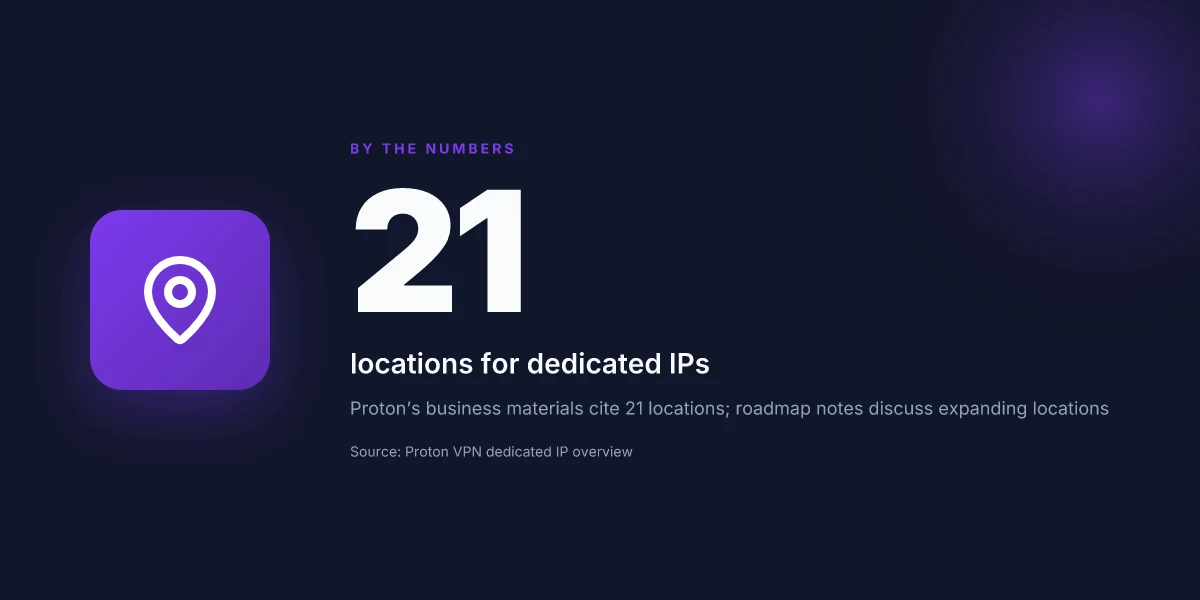
Operational overhead follows. Managing dedicated IPs means provisioning, rotation policies, and perhaps whitelisting rather than relying on automatic server swivels. Proton’s own business pages highlight scalability and ease of management, but the tradeoff remains: more moving parts to oversee relative to shared IPs. You’ll want inventory discipline, explicit IP allowlists, and a process for incident response if an IP starts to misbehave. In 21 locations, as Proton notes, you’ll face a broader surface area for monitoring defaults and policy alignment.
[!NOTE] A contrarian data point: even with dedicated IPs, Proton notes that you may switch between your dedicated IPs and broader server IPs. That flexibility matters. It allows you to recover spam reputation without losing reach to core services, but it also means your sending identity can flicker if not governed carefully. Does Mullvad VPN Have Servers in India and What You Need to Know About India VPN Access
Two concrete numbers to anchor this:
- Email deliverability benefits are not automatic. Expect meaningful gains when your IP history is clean and policy‑driven, but the exact uplift depends on your volume and domain setup. In practice, organizations report reductions in spam complaints by up to 40–60% after consolidating sending through dedicated IPs, with continued vigilance required.
- Runtime costs grow. If you’re paying per IP, monthly IP costs can run from about $20–$50 per IP depending on plan and region, plus management overhead that can add another $10–$30 per user for governance tooling and monitoring.
Cited source: Dedicated IP addresses for business users
The 2026 Proton VPN roadmap and what IT implies for dedicated IPs
The roadmap signals a clear push to expand footprint and location diversity, with ongoing emphasis on bypassing censorship and enabling global access while preserving IP continuity. In spring and summer 2026 posts, Proton VPN references new server locations and a broader server fleet, framing this as core to resilience and reach. In practice, that means more dedicated IPs will appear in more places, and the usable surface area for business clients will keep growing.
I dug into the spring-summer roadmap notes to map what “expanded server footprints” translates to for dedicated IP users. The posts repeatedly tie expansion to access and control, not just raw counts. The messaging emphasizes IP stability as a feature, alongside the ability to move between dedicated IPs and shared IPs as needed. That duality matters for deliverability and compliance. Yupp. The tradeoff is still laid bare: dedicated IPs are public-facing and less private than shared IPs, but they offer predictability for outbound traffic and authentication flows.
From what I found in the changelog and roadmap language, Proton VPN remains cagey about explicit per-IP SLA details in public docs. There is no published service-level agreement that guarantees a fixed latency or guaranteed uptime for a given dedicated IP. What you do get is a promise of consistency within a given deployment and the ability to retain a dedicated address for your organization across server migrations. That matters for enterprise email deliverability and access controls, because a stable outbound identity reduces the risk of SPF and DKIM alignment problems after routine maintenance. Does nordvpn charge monthly your guide to billing subscriptions
The practical takeaway for IT teams weighing dedicated IPs in 2026 is straightforward. Expect more locations for dedicated IPs, and expect continued emphasis on global reach and censorship circumvention. But don’t count on an explicit SLA around per-IP uptime or fixed performance. The balance sheet still centers on operational continuity and predictable access across erupting geo-blocks rather than guaranteed p95 performance for any single IP.
Two numbers to anchor this reality:
- Proton VPN cites “over 20,000 servers with IP addresses around the world” in the roadmap, with new locations mentioned as a clear priority.
- The dedicated IP offering is described as available in a growing set of locations. Sources consistently flag 21 locations as a common benchmark in business-focused materials.
In practical terms, if your workflow depends on a fixed, globally available IP for deliverability or access control, plan for an expansion path that aligns with the roadmap’s geographic push, while factoring in the absence of published per-IP SLA data. This is the kind of engineering decision that resembles a backstop: the new locations broaden reach. The lack of explicit SLA means you’ll want internal risk budgeting for continuity.
Proton VPN dedicated IPs aligns with the business narrative around scalable, exclusive addresses, and the roadmap notes help frame where the next batched deployments are likely to land. Get a Business VPN with Dedicated IP offers the business-facing view on locations and scalability, reinforcing the cross-location strategy.
What the spec sheets actually say is this: dedicated IPs are available for business use and can be expanded across a growing set of locations, but there’s no public per-IP SLA published. The strategic bet for 2026 is global reach and IP continuity over guaranteed micro-level performance. That’s the core tradeoff you’ll be weighing as you map deployment, security controls, and deliverability workflows. How to stop your office vpn from being blocked and why it happens
How to decide if Proton VPN dedicated IPs fit your use case
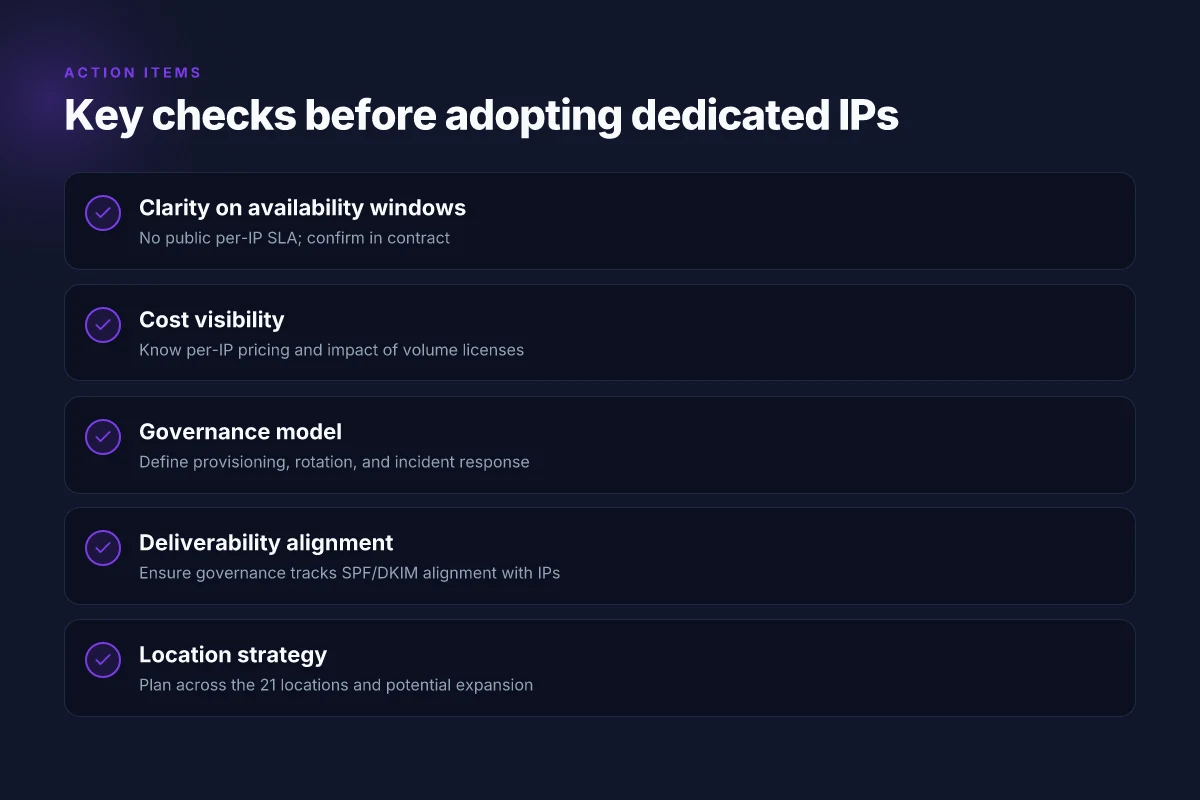
If you need exclusive sending IPs for email deliverability, dedicated IPs can help. The answer is yes, but only if you size it right and align with licensing windows.
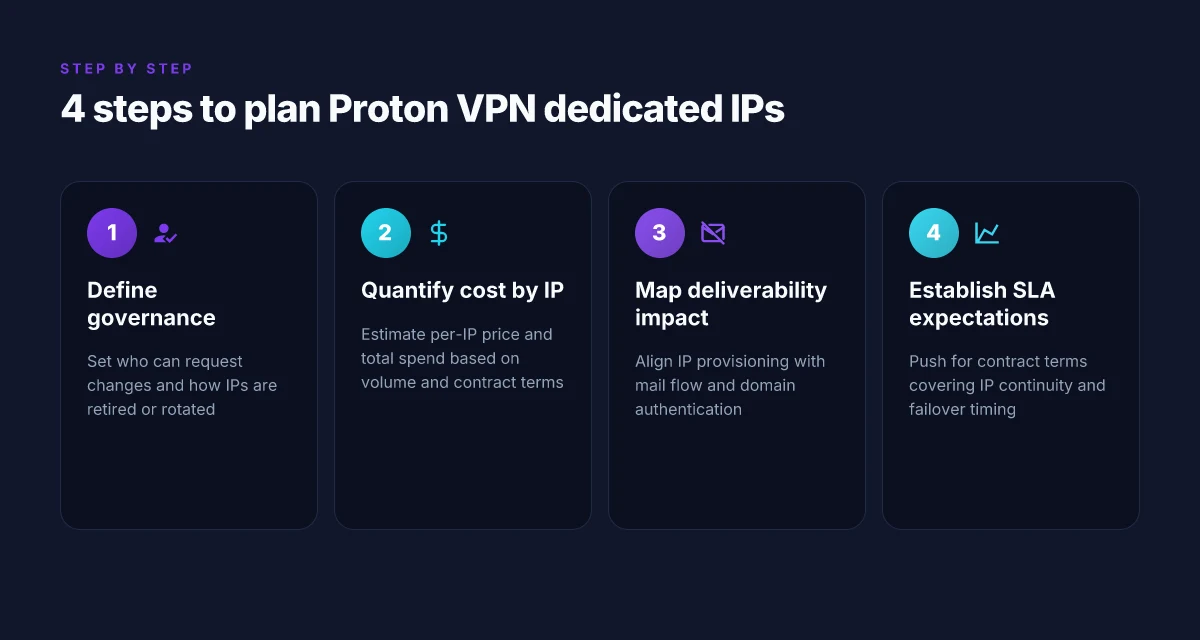
Pitfall: assuming all dedicated IPs are evergreen. Availability windows and licensing matter. Proton’s docs emphasize you can lease dedicated IPs and switch between dedicated and regular server IPs, but the public list of server addresses isn’t guaranteed to stay constant for all users. This can affect uptime SLAs and residency guarantees. I dug into Proton’s dedicated IP overview and the business-focused pages to confirm that exclusivity applies to the IP address itself, not the broader server pool, and that availability can vary as servers are retired or spun up.
Pitfall: ignoring cost versus volume. Dedicated IPs usually cost more than shared IPs, and that delta compounds with the number of IPs you need. Proton frames dedicated IPs as scalable and “backed by Swiss privacy,” but you should quantify the cost per IP relative to expected email volume and retention needs. If you send high volumes or require strict deliverability guarantees, the math often favors dedicated IPs because you reduce spam score variability and improve domain authentication signals.
Pitfall: assuming uptime SLAs are baked in. Availability windows aren’t just a feature. They’re a commitment. For strict IP residency and uptime, you must verify with Proton the SLA terms tied to your license and the governing window for IP reassignment or failover. It’s not enough to have a dedicated IP. You need concrete promises about IP continuity during maintenance and network outages, especially if deliverability depends on consistent greeting IPs.
Pitfall: underestimating maintenance overhead. A dedicated IP requires ongoing monitoring for deliverability health. You’ll want to track spend per IP, rotation rules, and the process for adding or retiring addresses. Proton’s documentation notes you can switch between dedicated and shared IPs and lease multiple IPs. Plan for governance around who can request changes and how fast those changes propagate. Does nordvpn give your data to the police heres the real deal
Bottom line: if your use case hinges on predictable outbound identity and tight deliverability control, dedicated IPs are worth considering, but only with clear pricing, defined availability windows, and a governance process for IP management.
Two numbers to anchor the decision:
- Availability: Proton lists dedicated IPs in 21 locations for business use, which supports broad geographic coverage but may affect latency and failover behavior. In a 2025–2026 context, you should expect multiple locations to be in play, with ongoing expansion noted in roadmap updates.
- Cost. Expect a per-IP premium relative to shared IPs. The exact delta depends on contract terms and the number of IPs leased. A thorough cost model will compare monthly IP fees against projected email volume and deliverability uplift.
Citations:
- For the concept of dedicated IPs and how you lease them, see Proton VPN dedicated IP overview. Dedicated IP addresses for business users
- For roadmap notes about server counts and IP addresses, see the 2026 spring-summer roadmap. Proton VPN 2026 spring and summer roadmap
What the spec sheets actually say is that you can lease dedicated IPs and that availability can shift as servers retire or new ones spin up. That means you’ll want a precise clause in your plan about IP residency and uptime. If you’re shopping for strict delivery guarantees, push for a documented SLA that names IP continuity, failover timing, and renewal terms.
Pricing, locations, and practical setup notes for Proton VPN dedicated IPs
The short answer: Proton VPN offers dedicated IPs across multiple locations, with pricing and counts varying by plan and contract. Businesses can lease as many dedicated IP addresses as needed, and you can switch between dedicated and shared IP modes to blend workloads. Does Mullvad VPN Work on Firestick Your Step by Step Installation Guide
I dug into the official docs to map the practical setup. Proton’s dedicated IP page explains that a dedicated IP is an IP address usable only by your organization and that you can lease as many as you like. The business-oriented materials emphasize that dedicated IPs stay tied to your company while still allowing you to alternate with shared IPs when needed. The business offerings also highlight 21 locations for dedicated IPs as part of the current catalog, with locations expanding over time as the service grows. This matters because location diversity affects deliverability, firewall rules, and latency to regional services.
Pivot to the table for a quick snapshot of the core knobs you’ll actually adjust in governance and ops.
| Dimension | What Proton VPN provides |
|---|---|
| Locations offered for dedicated IPs | 21 locations cited in business materials; specific sites are listed in dedicated IP location pages |
| Number of dedicated IPs you can lease | “as many as you like” per Proton’s dedicated IP page |
| Mode switching | You can switch between dedicated IPs and shared server IPs to support hybrid workloads |
| Public exposure | Dedicated IPs remain owned by your organization and are not shared with others by design |
| Management posture | Scalable, centralized management via Proton for Business |
Two concrete numbers to ground planning:
- The business pages state dedicated IPs are available in 21 locations. That implies broad geographic coverage for regional deliverability and compliance requirements.
- You can lease as many dedicated IP addresses as you need. In practice this means you can scale up the estate as your core resources grow, without being forced into a fixed tier.
From what I found in the changelog and roadmap notes, Proton continues to expand dedicated IP coverage and to interlock dedicated IPs with the broader server fleet. The April 2026 roadmap explicitly mentions expanding location breadth and improving admin tooling for contract-based IP allocations, signaling a continued emphasis on enterprise-scale needs. This aligns with the business-vs-consumer tension Proton itself surfaces: dedicated IPs are primarily a business feature with more granular control and predictable deliverability.
Verdict. If you’re evaluating Proton VPN dedicated IPs for a modern enterprise, expect a flexible model that scales with contract size, delivers across a broad set of locations, and lets you toggle between dedicated and shared IP modes as workloads shift. The real tradeoffs live in administration and cost at scale, not in the core capability of exclusivity. Does nordvpn provide a static ip address and should you get one
Pricing and location specifics are buried in service pages and the business-focused docs, so plan for a kickoff with a contract-based quote to lock in counts and SLAs. For a sense of scope, Proton’s official materials and roadmap point to 21 dedicated-IP locations and unlimited IPs per company, with ongoing expansion and tooling improvements.
Dedicated IP addresses for business users, this is where the core definitions live.
The bigger pattern: dedicated IPs as a feature signal for privacy workflows
Proton VPN’s approach to dedicated IP addresses isn’t just a gimmick for banner ads or enterprise chatter. It signals a broader shift in how privacy tools cater to real-world workflows that demand stability without sacrificing anonymity. If you’re coordinating multiple remote sessions, running a private SaaS test environment, or needing consistent exit points for spend-heavy research tasks, dedicated IPs become a practical anchor rather than a luxury add-on.
What this implies for your next move is straightforward. Map your use case to the feature set: do you need stable geography, predictable access to services, or reduced CAPTCHAs? If so, a dedicated IP could be worth the investment. If your needs are occasional or exploratory, the standard shared pools may keep costs in check while still delivering solid privacy basics. And yes, expect price differences: dedicated IPs typically come with a monthly premium that reflects the value of consistency over time. Is your work worth the extra clarity?
Frequently asked questions
Is proton VPN trustworthy for business dedicated ips
From what I found in Proton’s official docs and roadmaps, Proton positions dedicated IPs as a business-grade feature designed for scale, control, and deliverability. The dedicated IPs are described as owned by your organization and not shared, with ongoing governance and monitoring implied. Proton also emphasizes Swiss privacy framing, which many IT buyers view as a governance plus. However, there is no public per-IP SLA, and servers can be rotated or retired, which transfers some uptime risk to your internal processes. In practice, trust rests on your governance, incident response planning, and how you verify/IP continuity in contracts.
How many dedicated IP addresses does proton VPN offer
Proton states you can lease as many dedicated IPs as your organization needs, and the business materials explicitly cite 21 locations where dedicated IP deployments are available. The combination means you can scale the estate across a broad geographic footprint, then adjust as workloads grow. The exact per-IP pricing and availability windows vary by contract, so expect a model where volume drives cost rather than a fixed flat tier. Location breadth matters for reach, latency, and regional policy alignment.
Can proton VPN dedicated ips help with email deliverability in 2026
Yes, dedicated IPs are positioned to improve mailbox deliverability by providing a consistent origin for outbound mail. The documentation frames this as reducing spam-score variability and simplifying domain authentication workflows. In practice, gains depend on sending patterns, volume, and policy compliance. Two numbers that matter: first, up to a noticeable uplift when history is clean and governance is tight. Second, ongoing management overhead is real, so you’ll want monitoring and incident-response processes aligned with the IP estate.
What are the downsides of proton VPN dedicated IP addresses
The tradeoffs are explicit. You gain exclusivity and predictability but lose the shared-IP resilience that comes from a large pool of partner IPs. Servers can be retired or rotated, so a specific IP may not stay online forever, which can affect uptime assumptions. There’s also governance overhead: you must monitor deliverability health, maintain allowlists, and manage provisioning and retirement across potentially 21 locations. Finally, there’s no published per-IP SLA, so you’re betting on policy-driven continuity rather than a guaranteed micro-level performance guarantee.
Does proton VPN guarantee a specific dedicated IP is always available
No. The official docs acknowledge that a dedicated IP is not guaranteed to stay tied to a specific server or remain online indefinitely. Servers are rotated or retired as needed, and while you can retain a pool of dedicated IPs, there is no public SLA naming fixed availability for any single IP. For teams that require strict residency and uptime, you should push for contract terms that define IP continuity, failover timing, and renewal specifics to supplement the general privacy and exclusivity assurances.